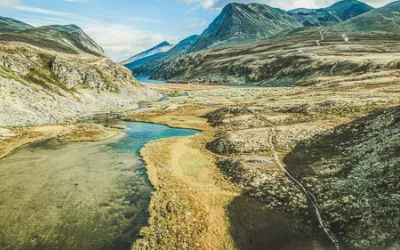
Conservation Areas and Right to roam
The right to roam gives us great opportunities to experience the nature around us for free.


The right to roam gives us great opportunities to experience the nature around us for free.
National parks and other conservation areas are meant to safeguard vulnerable and threatened ecosystems and preserve areas of international, national, and regional worth.
The government and the Storting establish the framework for Norwegian nature conservation, while the Norwegian Environment Agency, the country governors, and the governor of Svalbard carry out the conservation work pursuant to the Nature Diversity Act and the Svalbard Environmental Protection Act. In total, Norway administers around 2,700 conservation areas on the mainland and Svalbard.
In a national park, you are one of Nature’s guests
• Go wherever you want, on foot or on skis. Anything with an engine is basically banned.
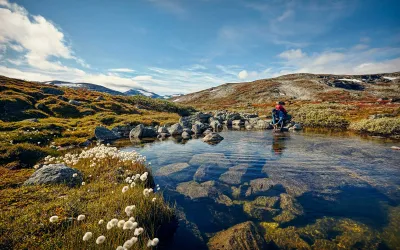
• Stop wherever you want, and camp for the night if you wish, but tidy up afterwards and take your rubbish home.
• You may light a fire, but remember the general ban on fires in woodland between 15 April and 15 September. Show consideration when you gather firewood, do not fell old trees since they are important for insects and birds.
• You may pick berries, mushrooms and common plants for your own use. Show consideration for cultural heritage sites, vegetation and animal life. Take extra care in the breeding season.
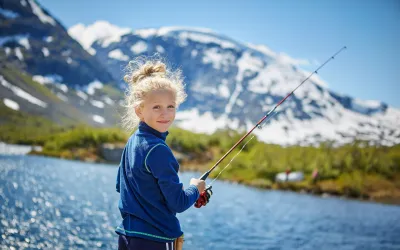
• Hunting and fishing are allowed, as elsewhere. Remember to buy hunting and fishing licences. Do not use live fish as bait. You must not take live fish from one river or lake to another.
• You may have a dog with you, but remember to keep it on a leash (the boroughs have slightly different by-laws regarding this).
Outdoor recreation is an important part of our cultural heritage in Norway. Since ancient times, we have had the right to roam freely in forests and open country, along rivers, on lakes, among the skerries, and in the moutains - irrespective of who owns the land. We are allowed to harvest nature´s bounty - whick means not only saltwater fish, berries, mushrooms and wildflowes, but also our sensory impressions of the whole outdoor experience. The main principles of the right to roam sre legally enshrined in he outdoor Recreation Act of 1957.
Practical information before your visit to Nasjonalparkriket
There is a statutory leash requirement for dogs from April 1 through August 20. There are several exceptions, including dogs used in reindeer herding, livestock guardian dogs, and dogs in active police, customs, military, and rescue service.
Individual municipalities may also, based on specific criteria, adopt their own local regulations regarding leash requirements. This applies, among other places, to parks, hiking trails and walking paths, ski trails, sports facilities, and camping and rest areas.
Follow the links below to familiarize yourself with local regulations.
There is more than enough space in nature for both hikers and cattle, so grazing livestock in an area is absolutely no reason to avoid going for a walk there. However, as a hiker, it is wise to familiarize yourself with how to behave when encountering cattle on pasture. This will create a better experience for both you and the animals.
There is plenty of space in nature, so grazing livestock is not a reason to avoid hiking. Still, hikers should learn how to act when encountering cattle on pasture. This helps ensure a more pleasant experience for both people and animals.
Every year, 254,000 calves, heifers, and cows graze on summer pastures in Norway’s outlying areas. Grazing animals help maintain the cultural landscape and contribute to open terrain that is enjoyable for hiking.
Conflicts most often arise when cows perceive their calves to be under threat. Like other mothers, they are protective and will defend their calves if they feel something or someone is threatening them. Such situations can occur if you get too close, walk between a cow and her calf, or bring a dog with you.
(Source: Norwegian Outdoor Council / Norsk Friluftsliv)
In the mountain areas east of Gudbrandsdalen, from Rondane National Park and southward, there are designated wild reindeer habitat zones. When traveling in these areas, it is important to show consideration for wild reindeer.
The Wild Reindeer Etiquette Rules present three questions you should ask yourself before going on a hike. Under each question, you will find useful information for those who want to help protect wild reindeer.
Read “Trip Planning for Reindeer-Friendly Hiking and the Wild Reindeer Etiquette Rules” here
From April 15 to September 15, it is prohibited to light campfires in forests and open land.
All use of open fire is prohibited in or near forests and other outlying areas during this period. This includes campfires, grills, firepits, camping stoves, and all other types of open flames.
Read more about the ban on campfires in forests and open land on Lovdata.no
There are public fire pits located in forests and open land that may be used year-round.
After long periods of dry weather, extra caution is necessary, as the risk of forest fires is high. Grass, bushes, and trees become extremely dry and ignite easily, and wildfires can spread very quickly. Be especially careful with cigarette butts and other ignition sources.